Energy efficiency matters more than ever in our homes. It not only helps you save money but also protects the environment. Today, smart home devices offer great solutions for cutting down on energy use. With more people embracing technology, these devices are becoming easier to find and more affordable. For instance, the average revenue per smart home installation dropped to $19.64 in 2025, making it accessible for many households. As we move toward 2029, it’s expected that over 635 million homes will adopt smart home technology. This trend shows that you can easily join the energy-saving movement!
Key Takeaways
Smart thermostats can save you 12% to 23% on energy bills by adjusting temperatures based on your habits.
Smart lighting systems use up to 75% less energy than traditional bulbs, offering both convenience and savings.
Smart plugs help reduce standby power consumption, potentially saving you 10-15% on your electricity bills.
Upgrading to energy-efficient appliances can lead to significant savings, with some models saving up to 30-40% on utility costs.
Integrating smart home devices not only lowers your bills but also contributes to a more sustainable lifestyle.
Thermostats
Features
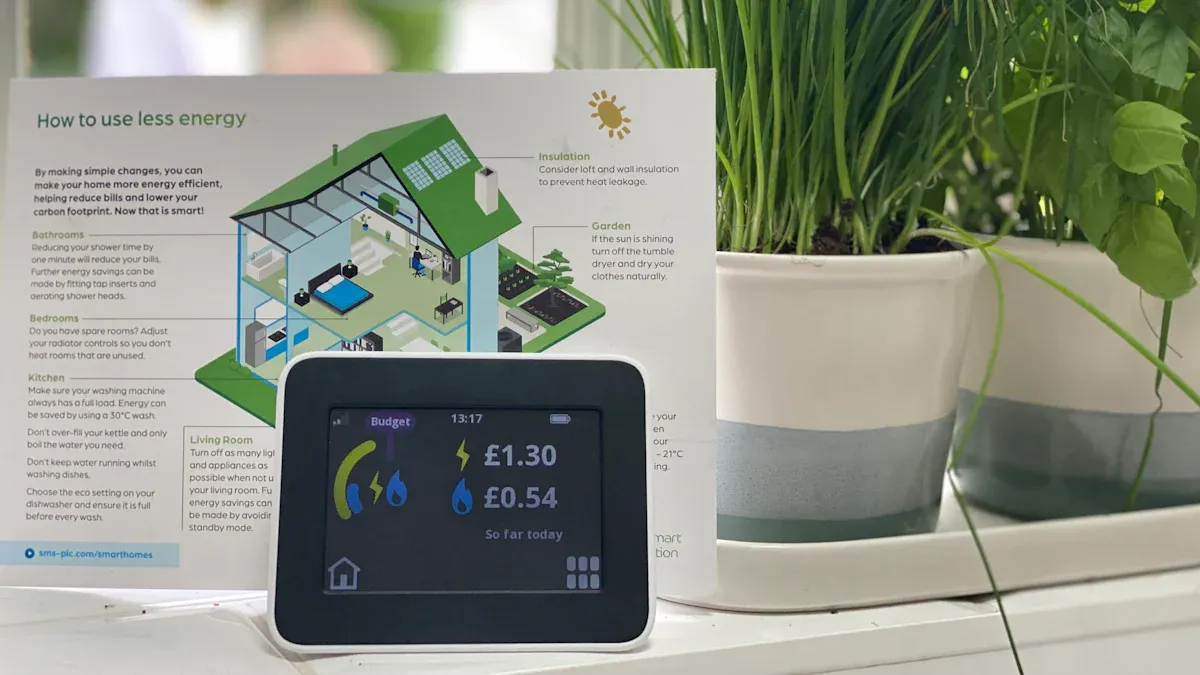
Smart thermostats are among the best smart home devices you can invest in for energy efficiency. They come packed with features that make managing your home’s temperature easier and more efficient. Here are some standout features you should look for:
Remote Sensors: Many models, like the Ecobee Smart Thermostat Premium, include advanced remote sensors that detect occupancy and temperature. This means they can adjust the heating or cooling based on where people are in your home.
Learning Algorithms: Devices such as the Google Nest Learning Thermostat use AI to learn your habits. They automatically create a schedule based on when you’re home or away, optimizing energy use without you lifting a finger.
Compatibility: Check if the thermostat works with your HVAC system. For example, the Mysa Smart Thermostat is perfect for homes with high-voltage electric heat, while others cater to low-voltage systems.
Smart Home Integration: Most smart thermostats can connect with your existing smart home setup. The Ecobee model even supports built-in Alexa and Siri, allowing you to control your home automation with voice commands.
Here’s a quick comparison of some popular models:
Feature | Ecobee Smart Thermostat Premium | Google Nest Learning Thermostat | Mysa Smart Thermostat |
|---|---|---|---|
Ideal Use Case | Multi-level homes with hot/cold spots | Busy households wanting hands-off automation | Homes with high-voltage electric heat |
Key Differentiator | Advanced remote sensors (occupancy & temp) | Self-learning algorithm that builds a schedule | High-voltage system compatibility |
HVAC Compatibility | Low-voltage systems (furnace, AC, heat pump) | Low-voltage systems (furnace, AC, heat pump) | High-voltage systems (baseboard, fan-forced) |
C-Wire Required | No (Power Extender Kit included) | No (uses power-stealing, but C-wire recommended) | No (powered by the heating system) |
Smart Home Hub | Yes (Built-in Alexa and Siri support) | No (Integrates with Google Assistant) | No (Integrates with all major platforms) |
Air Quality Monitor | Yes (monitors VOCs and CO2) | No | No |
Energy Savings
When it comes to energy savings, smart thermostats shine. You can expect to save between 12% to 23% on your energy bills compared to traditional thermostats. For instance, lowering your temperature by just 8 degrees Fahrenheit during the day can lead to savings of around 18%.
Smart thermostats adjust home temperatures automatically, ensuring you use energy efficiently. They learn from your behavior and adapt to your preferences. This means they can optimize heating and cooling based on factors like weather changes and your daily routine.
Additionally, the Department of Energy suggests that setting your thermostat back 7° to 10° F for 8 hours can save about 10% on heating and cooling bills. With smart thermostats, you can achieve this effortlessly. They balance comfort with energy savings, making them a smart choice for any homeowner.
Lighting
Best Models
Smart lighting has transformed how you illuminate your home. With smart LED bulbs, you can enjoy energy efficiency and convenience. Here are some of the best models available in 2026:
Philips Hue White and Color Ambiance: This popular choice offers a wide range of colors and can be controlled via an app or voice commands. You can set schedules and create scenes that match your mood.
LIFX A19: Known for its vibrant colors and no hub requirement, LIFX bulbs connect directly to your Wi-Fi. They also support voice commands and can be dimmed to save energy.
Wyze Bulbs: These budget-friendly options provide great value. They offer scheduling features and can be controlled through the Wyze app or voice assistants.
Smart LED bulbs consume up to 75% less energy than traditional incandescent bulbs. They last up to 25 times longer, making them a smart investment for your home. While smart bulbs use slightly more electricity than regular LED bulbs, the extra consumption is minimal-typically around 0.2 to 0.5 watts per bulb. This means you can enjoy the benefits of smart features without worrying about a significant increase in your energy bill.
User Reviews
Users rave about the convenience and energy savings that smart lighting brings. Here are some common themes from user reviews:
“I love how I can control my lights from my phone. It makes it easy to turn them off when I forget!”
“The scheduling feature is a game-changer. I set my lights to turn on at sunset, and it feels like home even when I’m away.”
“Motion sensors are fantastic! They automatically turn on the lights when I walk into a room, so I never have to fumble for a switch.”
Motion sensors play a crucial role in enhancing energy efficiency. They detect movement and ensure lights are only on when needed. This technology is especially effective in larger spaces, where energy waste can be significant. Here are some benefits of using motion sensors:
They create customizable lighting environments that adapt to your needs.
They automatically adjust based on presence or ambient daylight, enhancing comfort without manual intervention.
Reduced electricity consumption leads to lower utility bills and minimizes wear on bulbs, resulting in fewer replacements.
With smart lighting systems, you can also take advantage of advanced scheduling capabilities. Here’s a quick look at some features:
Feature | Description |
|---|---|
Scalable Personalization | Each space can be programmed individually to suit your schedule and needs. |
Health and Wellness | Lighting can mimic natural light patterns throughout the day, promoting well-being. |
Smart Lighting Solutions | Schedule lights to operate automatically via an app or voice command, enhancing your home automation experience. |
Incorporating smart lighting into your home not only enhances convenience but also contributes to energy savings. By choosing the right models and utilizing features like motion sensors and scheduling, you can significantly reduce your energy consumption while enjoying a well-lit environment.
Smart Plugs
Top Picks
Smart plugs are fantastic additions to your home if you want to boost energy efficiency. They allow you to control devices remotely and monitor energy usage. Here are some of the best smart plugs available in 2026:
Model Name | Key Features |
|---|---|
Kasa Matter Smart Plug with Energy Monitoring | Slim design, energy monitoring insights, supports Matter, real-time energy usage tracking. |
Best Indoor Smart Plugs for Energy Monitoring | Integrates with Alexa, Google Assistant, Apple Home, tracks energy use accurately, easy to install. |
These smart plugs not only help you manage your devices but also provide valuable insights into your energy consumption.
User Experiences
Using smart plugs can significantly reduce your energy bills. They help minimize standby power, which is the energy consumed by devices when they’re not in use. Many users have reported saving up to 10-15% on their electricity bills just by using smart plugs effectively.
Sarah, a homeowner, tackled standby power consumption by connecting her entertainment system to smart plugs. By scheduling the smart plugs to turn off automatically during the night and when no one was home, she significantly reduced her standby power consumption, resulting in noticeable energy and cost savings.
Smart plugs work by measuring the energy flowing through the device. They sit between your device and the outlet, tracking how much energy it uses. This way, you can identify which devices are power-hungry and adjust your usage accordingly.
Here’s how they enhance your energy efficiency:
Remote Control: Turn off devices from anywhere, reducing unnecessary energy use.
Automation and Scheduling: Set schedules for devices to ensure they only operate when needed.
Energy Monitoring: Track energy usage to pinpoint and reduce wasteful devices.
With smart plugs, you can take control of your energy consumption and make your home more efficient. They are among the best smart home devices to help you save money and energy.
Appliances
Recommended Products
When it comes to energy-efficient appliances, you have some fantastic options in 2026. Here are a few of the best smart home devices that can help you save energy and money:
LG WM6700HBA Washer: This Energy Star-rated washer boasts a MEF rating of 2.8, meaning it uses less energy while delivering excellent cleaning performance.
Samsung Bespoke Refrigerator: With an IWF rating of 3.0, this stylish fridge not only looks great but also conserves water and energy effectively.
These appliances integrate seamlessly into your home, making it easier for you to manage energy consumption.
Energy Efficiency Ratings
Understanding energy efficiency ratings can help you make informed choices. Here’s a quick look at some key ratings for smart appliances:
Rating | Meaning | Example Model | Annual Savings |
|---|---|---|---|
MEF 2.8 | Energy factor | LG WM6700HBA | $45 |
IWF 3.0 | Water factor | Samsung Bespoke | $30 |
Smart appliances like refrigerators and washers adjust their operations based on your usage patterns. For instance, smart refrigerators can modify cooling settings and send alerts if doors are left open. Smart washers optimize their cycles for energy savings. This integration with home automation systems allows you to control these appliances remotely, enabling you to run them during off-peak hours when energy costs are lower.
By upgrading to smart appliances, you can enjoy significant cost savings over their lifetime. For example, Energy Star washers save about 20% less energy and 30% less water compared to standard models, translating to around $550 in savings over their lifetime.
Incorporating these smart home devices into your daily routine not only enhances convenience but also contributes to a more energy-efficient home.
Adopting smart home devices can significantly enhance your energy efficiency. These devices not only help you save money but also contribute to a greener planet. Here are some key benefits:
Energy Tracking: Devices like smart plugs show you which appliances use the most energy, helping you cut back.
Smart Thermostats: They adjust temperatures based on your schedule, preventing energy waste.
Energy-Efficient Appliances: Upgrading to smart fridges and washers can lead to savings of 30-40% on your utility bills.
By integrating these technologies into your home, you can enjoy lower bills and a more sustainable lifestyle. Why not take the leap and start saving today? 🌍💡
FAQ
What is a smart home security system?
A smart home security system connects devices like cameras and alarms to your smartphone. You can monitor your home remotely, receive alerts, and control security features from anywhere.
How do smart security cameras work?
Smart security cameras use Wi-Fi to stream video to your device. You can view live feeds, receive motion alerts, and even communicate through two-way audio.
Can I integrate smart devices with my existing home setup?
Yes! Most smart home devices, including security systems, work with existing setups. They often connect through apps or hubs, making integration simple.
Are smart home devices energy-efficient?
Absolutely! Smart home devices optimize energy use. For example, smart thermostats adjust temperatures based on your habits, saving you money on utility bills.
How do I choose the right smart home devices?
Consider your needs and budget. Look for devices that offer energy efficiency, compatibility with your existing systems, and user-friendly features.