Smart glasses have the potential to revolutionize your experience with augmented reality. As interest in augmented reality technologies surges, you may find yourself drawn to the innovative features of smart glasses. Current projections show that in 2024, around 1.03 billion mobile AR users will exist worldwide, increasing to 1.19 billion by 2028. This growth reflects a strong demand for immersive experiences. The market for smart glasses is also expanding rapidly. By 2030, the overall market size is expected to reach USD 4,129.3 million, with a remarkable growth rate of 29.4%. Clearly, smart glasses are at the forefront of this technological evolution.
Key Takeaways
Smart glasses enhance user experience by providing hands-free access to information, making interactions with augmented reality more natural and immersive.
Practical applications of smart glasses span various industries, improving efficiency in healthcare, education, and logistics through real-time data access.
Technological challenges, such as battery life and display quality, currently limit the widespread adoption of smart glasses, but advancements are on the horizon.
Societal acceptance of smart glasses is crucial; addressing privacy concerns and social norms will help increase user comfort and trust.
The smart glasses market is projected to grow significantly, driven by advancements in AI and 5G technology, promising a bright future for augmented reality.
AR Evolution

Historical Context
Augmented reality has a rich history that dates back several decades. The concept began to take shape in the late 1960s. In 1968, Ivan Sutherland created the first head-mounted display (HMD). This device allowed users to see computer-generated graphics overlaid on the real world. It marked a significant step in AR technology.
In the following years, other innovators contributed to the field. For example, Myron Krueger developed Videoplace in 1975. This system enabled users to interact with virtual objects in real-time. By 1992, the introduction of Virtual Fixtures further advanced AR. This system enhanced human perception by overlaying virtual elements in the real world.
Year | Device Name | Description |
|---|---|---|
1968 | Ivan Sutherland’s HMD | The first optical-see-through head-mounted display with computer-generated graphics. |
1975 | Myron Krueger’s Videoplace | A system that allowed users to interact with virtual objects in real-time. |
1992 | Virtual Fixtures | An AR system that enhanced human perception by overlaying virtual elements in the real world. |
Key Milestones
Over the years, several technological breakthroughs have significantly advanced augmented reality. You can see these advancements in various areas:
The introduction of headsets like Google Glass and Microsoft HoloLens
Advancements in spatial mapping technology
Integration of AR into applications such as education, retail, and navigation
Development of smart glasses that combine AR functionalities with everyday use
These milestones have expanded the scope of augmented reality. Today, AR tools are more affordable and user-friendly. They enhance interactive and immersive experiences in daily life.
In the last five years, trends like high-resolution displays and lightweight designs have emerged. These improvements make AR more accessible. You can now find AR applications in fields like education, tourism, and retail.
Benefits of Smart Glasses
Enhanced User Experience
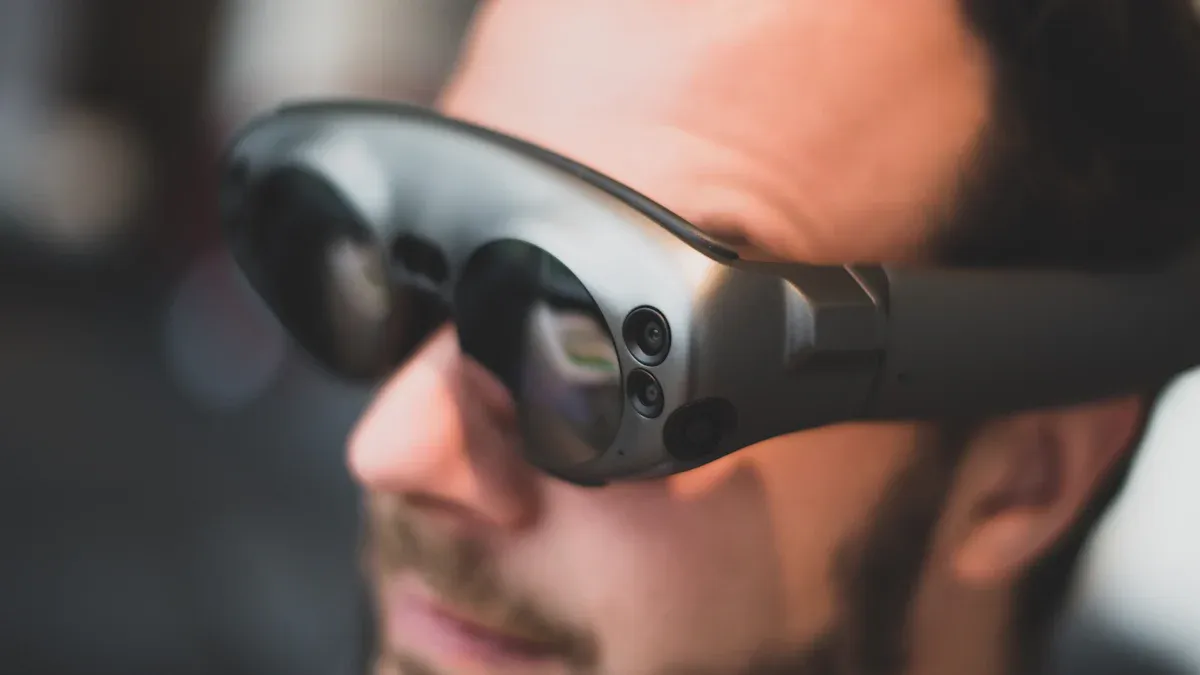
Smart glasses offer a unique way to interact with augmented reality. They provide hands-free access to information, allowing you to engage with digital content without needing to pull out a device. This always-on accessibility makes smart glasses more convenient than traditional AR devices. You can enjoy a more natural and immersive experience as these glasses project digital content directly onto your retina. This feature enhances depth perception and peripheral awareness, creating a seamless blend of real and virtual environments.
Imagine walking through a museum while receiving information about the exhibits without needing to look at a smartphone. Smart glasses can display a digital layer of information right in your line of sight. This capability not only enriches your experience but also keeps your hands free for other activities.
Practical Applications
Smart glasses have practical applications across various industries. Here are some common uses:
Surgeons utilize augmented reality overlays to access vital patient information during procedures, enhancing precision and minimizing complications.
Healthcare providers conduct remote consultations using smart glasses, viewing the patient’s perspective for more accurate diagnoses.
Smart glasses enhance learning through immersive lessons and interactive overlays, aiding students with attention challenges.
Technicians access schematics and troubleshooting guides instantly, improving efficiency and reducing downtime.
The impact of smart glasses is evident in real-world scenarios. For instance, Chi Mei Medical Center reported reduced emergency response times and faster diagnoses using Vuzix glasses. In the automotive industry, BMW completed repairs up to 75% faster, significantly cutting travel costs for technical experts. The Aptus Group, working in logistics, saw a 15% increase in receiving performance and a 20% faster picking rate due to smart glasses.
Company/Organization | Application Area | Key Outcomes |
|---|---|---|
Chi Mei Medical Center | Healthcare | Reduced emergency response times and faster diagnoses using Vuzix glasses. |
BMW | Automotive | Repairs completed up to 75% faster, reduced travel costs for technical experts. |
Aptus Group | Logistics | 15% increase in receiving performance, 24% increase in put-away performance, 20% faster picking. |
Smart glasses not only enhance user experience but also improve productivity and efficiency in professional settings. They allow workers to view instructions and diagrams without interrupting their tasks. This hands-free access reduces cognitive load and helps you focus better. Real-time guidance minimizes errors, saving time and resources.
Challenges for Smart Glasses
Technological Limitations
Smart glasses face several technological challenges that hinder their widespread adoption. You may notice that many models struggle with limited battery life. This issue becomes especially apparent when using power-intensive features like augmented reality or continuous video recording. As a result, you might find yourself needing to recharge your smart glasses frequently, which can be inconvenient.
Additionally, display quality remains a concern. Some smart glasses suffer from edge blurring or a limited field of view. These limitations can impact your overall experience, making it difficult to fully engage with augmented reality content. Here are some key technological limitations to consider:
Battery Life: Many smart glasses drain their batteries quickly, limiting how long you can wear them throughout the day.
Display Limitations: Issues like edge blurring and restricted field of view can detract from the immersive experience you expect from augmented reality.
Processing Power: Current models may not have the necessary processing power to run complex applications smoothly, which can lead to lag and frustration.
As manufacturers work to improve these aspects, you can expect advancements in smart glasses technology. However, these challenges currently affect user satisfaction and overall usability.
Societal Acceptance
Societal acceptance poses another significant challenge for smart glasses. You may feel hesitant to wear them in public due to concerns about privacy and social norms. The presence of cameras and sensors raises questions about data collection and surveillance. These privacy issues can make you uncomfortable, especially in sensitive environments like healthcare or education.
Public perception varies across different regions. For example, a study highlights that South Koreans exhibit greater privacy concerns regarding augmented reality smart glasses compared to Americans. However, despite these concerns, South Koreans also show more positive attitudes and higher intentions to use these devices. This indicates that while privacy issues are critical, they do not entirely hinder acceptance in some cultures.
Here are some societal concerns that may affect the adoption of smart glasses:
Privacy Concerns: The use of cameras and sensors raises issues regarding data collection and surveillance, necessitating robust data protection measures.
Social Norms: Wearing smart glasses can alter social interactions, leading to discomfort among users and the public.
User Acceptance: Stigmas and concerns about comfort and privacy may delay widespread adoption, despite the benefits offered by smart glasses.
As society adapts to new technologies, you may find that acceptance of smart glasses improves over time. However, addressing these concerns is crucial for manufacturers to gain your trust and encourage adoption.
Future of Smart Glasses
Market Growth Projections
The smart glasses market is set for significant growth in the coming years. Analysts predict a Compound Annual Growth Rate (CAGR) of well above 20%. This means you can expect the market to expand from low single-digit billions to a multi-billion-dollar industry by the end of the decade. Here are some key projections:
The market could reach over 50 million units sold by 2035.
Valuation may exceed USD 10 billion by 2035.
Optimistic forecasts suggest a steady growth rate, while pessimistic views indicate challenges like high manufacturing costs and privacy concerns.
Leading companies in the smart glasses market are developing distinct strategies for augmented reality integration. For example, one major tech firm focuses on building a robust software platform while creating its own hardware. Another company, known for its stylish designs, plans to release a more accessible glasses form factor by 2025. These developments show that the future of augmented reality is bright, with smart glasses at the forefront.
Integration with Other Technologies
Smart glasses will increasingly integrate with emerging technologies like AI and 5G networks. This integration will enhance their functionality and user experience. Here are some ways this will happen:
AI will enable smart glasses to understand context and provide proactive assistance.
5G networks will offer high-speed, low-latency connectivity, essential for real-time applications.
The combination of AI and 5G will allow smart glasses to perform complex tasks that typically require powerful computing resources.
Additionally, the rise of generative AI technology will enable hyper-personalized services on smart glasses. Improvements in connectivity and cloud technology will further support their functionality. As consumers become more accustomed to wearables, the market for smart glasses will continue to grow.
Smart glasses could indeed shape the future of augmented reality. They offer unique benefits, such as hands-free access to information and enhanced user experiences. As you consider the implications of this technology, think about how it can transform daily activities.
However, challenges remain. Issues like privacy concerns and technological limitations may slow adoption. The integration of AI and advancements in design will be crucial for overcoming these hurdles.
Ultimately, the future of smart glasses looks promising. With growing consumer interest and innovative applications, you may soon find smart glasses becoming an essential part of your life.
FAQ
What are smart glasses?
Smart glasses are wearable devices that look like regular glasses but include technology to display information. They enhance your reality by overlaying digital content onto the real world, providing hands-free access to data and applications.
How do smart glasses work?
Smart glasses use augmented reality technology to project digital images onto your field of view. They often include cameras, sensors, and displays that interact with your environment, allowing you to see both real and virtual elements simultaneously.
Are smart glasses safe to use?
Yes, smart glasses are generally safe to use. However, you should be aware of your surroundings while wearing them. Some models include features that help you stay aware of your environment, ensuring a safer experience.
Can I use smart glasses for gaming?
Absolutely! Smart glasses can enhance gaming experiences by immersing you in augmented reality environments. You can interact with virtual characters and objects, making gameplay more engaging and interactive.
How much do smart glasses cost?
The price of smart glasses varies widely based on features and brand. You can find basic models starting around $200, while advanced options with more capabilities can exceed $1,000. Always consider your needs before purchasing.