Choosing the right features in wearable gadgets can significantly enhance your workout experience. With 65% of fitness enthusiasts relying on these devices for monitoring their performance, it’s clear that they play a crucial role in achieving fitness goals. Not only do these gadgets track your progress, but they also provide valuable health data that can motivate you. Studies show that wearables foster intrinsic motivation, helping you stay committed even after setbacks. So, when you select a wearable, consider how its features can support your journey to better health and fitness.
Key Takeaways
Choose wearables with heart rate monitoring to optimize your workouts and understand your cardiovascular health.
Look for GPS tracking in your device to accurately measure your outdoor activities and analyze your performance.
Select gadgets that track daily activity to encourage movement and help you set realistic fitness goals.
Consider sleep quality tracking features to improve recovery and overall health, leading to better workout performance.
Evaluate the cost versus features of wearable gadgets to ensure you invest wisely in tools that support your fitness journey.
Key Tracking Features
When it comes to wearable gadgets, tracking features are essential for maximizing your workout potential. Let’s dive into three key metrics that can elevate your fitness journey: heart rate monitoring, GPS tracking, and activity tracking.
Heart Rate Monitoring
Heart rate monitoring is one of the most crucial features in fitness trackers. It helps you understand your cardiovascular health and optimize your workouts. By keeping an eye on your heart rate, you can adjust your intensity to ensure you’re training effectively.
Did you know? Most wearable gadgets track various heart rate metrics, including:
Resting Heart Rate (RHR) – Indicates your fitness level.
Heart Rate Variability (HRV) – Reflects your recovery status.
Blood Oxygen Levels (SpO2) – Shows how well your body delivers oxygen.
ECG (Electrocardiogram) – Detects heart irregularities.
Many fitness trackers provide real-time heart rate data, allowing you to make immediate adjustments during your workouts. This feature is vital for maximizing fat burning and ensuring you stay within your optimal training zone. Research shows that real-time monitoring can help you:
Adjust energy output for better caloric expenditure.
Train within the most efficient energy system.
Get immediate feedback for precise training adjustments.
Most wearable devices accurately monitor resting heart rate, with only minor discrepancies compared to medical devices. For instance, the Apple Watch and Samsung Galaxy Gear S3 boast 100% accuracy in detecting atrial fibrillation, making them reliable choices for heart health monitoring.
GPS Tracking
GPS tracking is another game-changer for outdoor workouts. Whether you’re running, cycling, or hiking, built-in GPS provides accurate route tracking and performance insights. This feature allows you to analyze your pace, distance, and elevation changes, helping you identify areas for improvement.
Feature | Benefit |
|---|---|
Accurate route tracking | Helps you find stronger paths and avoid inefficiencies |
Performance insights | Provides actionable data for improvement |
Activity history | Keeps you motivated by showing progress |
Customization for activities | Adapts to specific needs of cyclists and runners |
With GPS tracking, you can also review your activity history, which keeps you motivated by showing how far you’ve come. Plus, it allows you to customize your workouts based on your specific goals.
Activity Tracking
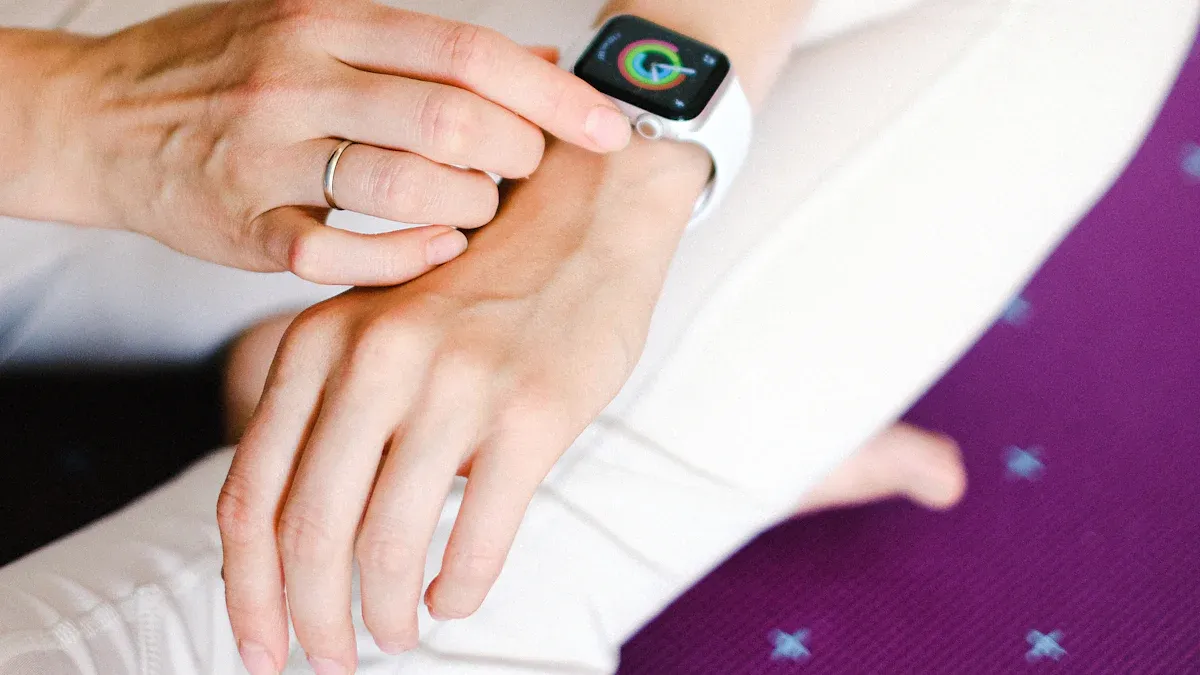
Activity tracking is essential for monitoring your daily movement. It counts your steps, tracks your workouts, and even measures your overall activity levels. This feature encourages you to stay active throughout the day, not just during your workouts.
Research indicates that users who engage in daily activity tracking can see significant improvements in their fitness. For example, tracking can lead to:
An increase of approximately 1800 extra steps per day.
A reduction of about 1 kg in body weight over time.
An additional 40 minutes of walking each day.
Reliable fitness trackers, like the Garmin Vivosmart HR+, have proven effective in various conditions, ensuring you get accurate activity data. This information helps you set realistic goals and stay accountable.
Health Metrics to Consider
When you choose a wearable gadget, consider the health metrics it offers. These metrics can provide valuable insights into your overall well-being and help you optimize your workouts. Let’s explore three important metrics: sleep quality tracking, calorie counting, and VO2 max insights.
Sleep Quality Tracking
Sleep quality tracking is a feature that many fitness trackers offer. It helps you understand how well you sleep and how it affects your health. Good sleep is essential for recovery and performance. Here’s why sleep tracking matters:
Wearable devices can enhance perceived sleep quality and accurately track sleep variables.
Improved sleep quality is linked to reduced sleep disturbances.
Increased physical activity and behavioral changes, prompted by feedback from wearables, may contribute to better health outcomes.
By monitoring your sleep patterns, you can identify factors that disrupt your rest. This awareness allows you to make changes that improve your sleep hygiene, leading to better recovery and performance during workouts.
Calorie Counting
Calorie counting is another crucial feature in wearable gadgets. It helps you keep track of the calories you consume and burn. While this feature can be beneficial, it’s important to understand its accuracy. Here are some key points:
Wearable devices generally show poor accuracy in measuring energy expenditure, with mean absolute percentage errors (MAPE) exceeding 30%.
Manual tracking methods, while subject to recall bias, do not exhibit the same level of inaccuracy as wearable devices.
Despite these limitations, calorie counting can still offer several benefits:
Benefit | Description |
|---|---|
Portion Control | Helps individuals understand portion sizes, crucial for weight management. |
Creating Awareness | Fosters awareness of dietary habits, prompting reconsideration of food choices. |
Setting Realistic Goals | Aids in goal-setting strategies for weight loss, maintenance, or muscle gain. |
By using calorie counting effectively, you can make informed decisions about your diet and exercise, helping you reach your fitness goals.
VO2 Max Insights
VO2 max is a critical measure of your aerobic capacity and fitness. It indicates how efficiently your heart, lungs, and muscles utilize oxygen during exercise. Higher VO2 max levels correlate with better physical fitness and performance. Here’s how wearable gadgets measure VO2 max:
Wearable gadgets estimate VO2 max using algorithms that analyze heart rate and activity data.
Devices like Garmin require a minimum activity duration (10 minutes) and can filter out non-relevant data.
The algorithms assess your speed and heart rate to estimate fitness levels, even during submaximal efforts.
Regular endurance training can significantly enhance your VO2 max, which is vital for athletes aiming to improve their performance. By tracking this metric, you can gauge your fitness level and adjust your training accordingly.
Connectivity and Compatibility
When choosing wearable gadgets, connectivity and compatibility are crucial features that can enhance your fitness experience. Let’s explore how app integration and device syncing can make a difference in your workout routine.
App Integration
App integration plays a vital role in tracking your fitness progress. When your wearable gadget connects with fitness applications, it provides real-time insights into various health metrics like steps, heart rate, and sleep patterns. This data empowers you to make informed decisions about your health and fitness routines.
Tip: Look for fitness apps that personalize your experience by tailoring workout plans based on your activity levels and progress. This keeps you engaged and motivated!
Some popular fitness apps that work seamlessly with wearable gadgets include:
MyFitnessPal
Strava
Fitbit App
Apple Health
Google Fit
These apps not only help you monitor activities and heart rates but also provide real-time feedback, making your workouts more effective.
Device Syncing
Device syncing is another essential feature to consider. Wearable gadgets sync with other devices through seamless integration across platforms. This means you can expect real-time updates across apps, ensuring your activity tracking and health data stay in sync.
However, you might encounter some common compatibility issues, such as:
Bluetooth interference from other devices.
Glitches in companion apps that may freeze or crash.
Outdated firmware causing syncing problems.
Weak Wi-Fi or cellular signals affecting cloud-based syncing.
Interestingly, about 59 percent of smartwatch owners use third-party apps, highlighting the demand for compatibility and integration. By ensuring your wearable gadget syncs smoothly with other devices, you can enhance your overall fitness tracking experience.
Embracing these connectivity features can significantly improve how you monitor your workouts and health metrics, making your fitness journey more enjoyable and effective.
Comfort and Durability Features
Ergonomic Design
When you’re working out, comfort is key. An ergonomic design in wearable gadgets ensures that they fit well and feel good during your workouts. Here are some important ergonomic features to consider:
Ergonomic Feature | Description |
|---|---|
Fit | A good wearable device design fits perfectly with your body, ensuring seamless interaction. |
Size | The size of the device affects how it interacts with your skin, requiring careful consideration in design. |
Anatomical Comfort | All skin contact surfaces should have rounded edges to prevent irritation or discomfort during use. |
Proper ergonomic design enhances your workout experience in several ways:
It aligns with your body’s natural movements, reducing strain.
It allows for easy adjustments to accommodate different body types.
A well-designed grip minimizes fatigue during repetitive movements.
When you feel comfortable, you’re more likely to stay engaged and return to your workouts consistently.
Water Resistance
Water resistance is another crucial feature for wearable gadgets, especially if you enjoy outdoor activities or intense workouts. Understanding the IP ratings can help you choose a device that withstands moisture. Here are some common ratings:
IP67: Solid protection against dust and temporary immersion.
IP68: Suitable for prolonged immersion in water.
IP69K: Designed for high-pressure, high-temperature water jets.
These ratings directly impact the durability and lifespan of your device. Higher ratings mean better protection against environmental factors, which is essential for maintaining accuracy and functionality.
Aspect | Explanation |
|---|---|
Enhancing Product Lifespan | Waterproof testing helps manufacturers identify and rectify design flaws, leading to longer-lasting devices. |
Safety Considerations | Proper waterproof testing reduces risks of electrical malfunctions in wet conditions, enhancing reliability. |
Choosing a wearable gadget with good water resistance ensures that it can handle sweat, rain, or even accidental splashes. This durability allows you to focus on your workouts without worrying about damaging your device.
Evaluating Price and Value
When you’re shopping for wearable gadgets, understanding the balance between cost and features is crucial. You want to make sure you get the best bang for your buck. Here are some key points to consider:
Cost vs. Features
Many consumers find themselves weighing the cost against the features offered by wearable gadgets. Over 70% of people say that price is a significant barrier to buying advanced health devices. This often leads them to consider refurbished or second-hand options. More than 50% prefer one-time payments instead of subscription models, showing a strong desire to avoid ongoing costs.
When evaluating a gadget, think about what features you truly need. For example, if you’re focused on tracking your heart rate and steps, you might not need all the bells and whistles of a high-end model. Here’s a quick look at average costs for different categories of wearable gadgets:
Category | Average Cost Range |
|---|---|
Mainstream Smartwatches | $200 – $450 |
Specialized Sports and Health Watches | $400 – $700 |
Long-term Value
Investing in wearable gadgets isn’t just about the initial cost. You should also consider their long-term value. Here are some factors that contribute to this:
Reliability of sensor information can vary based on technology and usage.
The ability to provide long-term trend data helps you understand your health over time.
Your comfort with technology affects how often you use the device.
Privacy concerns can impact your trust in the gadget.
Regular maintenance, like software updates, is essential for keeping your device functional. Ignoring these updates can lead to breakdowns, costing you more in the long run. Smart warranties can also enhance long-term value by covering defects and ensuring your gadget remains in good condition.
By considering both the cost and long-term value, you can make a more informed decision when choosing wearable gadgets for your workouts. This approach helps you invest wisely in your fitness journey.
Choosing the right wearable gadgets can make a big difference in your workouts. Key features like heart rate tracking, GPS, and sleep insights help you monitor your progress and stay motivated. Remember, the best device aligns with your personal fitness goals. Whether you want to track steps, calories, or improve your overall health, select a gadget that fits your needs. With the right tools, you can enhance your fitness journey and achieve your goals more effectively!
FAQ
What features should I prioritize in a workout wearable?
Focus on heart rate monitoring, GPS tracking, and activity tracking. These features help you understand your performance and keep you motivated during workouts.
Can I wear my fitness tracker while swimming?
Yes, many fitness trackers are water-resistant. Check the IP rating to ensure it can handle water exposure during swimming sessions.
How accurate are calorie counts on wearables?
Calorie counts can vary in accuracy. While they provide a general idea, consider them as estimates rather than precise measurements.
Do I need a smartphone to use a fitness tracker?
Not always! Some fitness trackers work independently, but many offer enhanced features when synced with a smartphone app.
How often should I charge my wearable device?
Charging frequency depends on the device. Most wearables last 3 to 7 days on a single charge, so check the battery life to plan accordingly.