Smart thermostats play a crucial role in enhancing your home’s comfort while boosting energy efficiency. Did you know that as of 2025, 16% of households in the U.S. with Internet access are using smart thermostats? These devices can save you up to 10% on heating and cooling costs by learning your habits and adjusting temperatures accordingly. With so many options available, how can you choose the best smart thermostat for your unique needs?
Key Takeaways
Smart thermostats can save you up to 10% on energy bills by learning your habits and adjusting temperatures automatically.
Check compatibility with your HVAC system before purchasing a smart thermostat to ensure it will work properly.
Consider your budget and the features you want; investing in advanced models can lead to greater energy savings.
Look for energy-saving features like smart scheduling and geofencing to enhance comfort and efficiency.
Choose a model that integrates well with other smart home devices for a seamless automation experience.
What is a Smart Thermostat?
A smart thermostat is a modern device that helps you control your home’s heating and cooling systems more efficiently. Unlike traditional thermostats, which require manual adjustments, smart thermostats learn your habits and preferences. They automatically adjust the temperature based on your schedule and even the weather outside. This means you can enjoy a comfortable home without constantly fiddling with the settings.
Benefits of Smart Thermostats
Using a smart thermostat comes with several advantages that can enhance your home experience. Here are some key benefits:
Remote Access: You can adjust your home’s temperature from anywhere using a smartphone app. This means you can warm up your house before you arrive or cool it down while you’re away.
Energy Efficiency: Smart thermostats learn your schedule and optimize heating and cooling accordingly. This can lead to significant energy savings, with some users reporting up to 10% off their energy bills.
Weather Adaptation: These devices can adjust settings based on local weather forecasts. If a cold front is coming, your thermostat can prepare your home in advance.
Usage Reports: Smart thermostats provide insights on your energy consumption. This information helps you understand your usage patterns and find ways to save even more.
Integration with Smart Home Devices: Many smart thermostats work seamlessly with other smart devices in your home, such as lights and security systems. This integration allows for a more cohesive home automation experience.
Here’s a quick comparison of smart thermostats and traditional thermostats:
Feature | Smart Thermostat | Traditional Thermostat |
|---|---|---|
Remote Access | Yes, via smartphone app | No |
Learning Capabilities | Yes, adjusts based on user habits | No |
Integration with Smart Devices | Yes, works with Alexa, Google Assistant, etc. | No |
Energy Reports | Yes, provides insights on energy consumption | No |
Scheduling | Yes, customizable schedules | Limited or manual |
Geofencing | Yes, adjusts based on user location | No |
By choosing a smart thermostat, you not only enhance your comfort but also contribute to a more energy-efficient home.
Key Considerations for the Best Smart Thermostat
When choosing the best smart thermostat for your home, several key factors come into play. Understanding these considerations can help you make an informed decision that suits your needs.
Compatibility with HVAC Systems
First and foremost, you need to ensure that your smart thermostat is compatible with your HVAC system. Not all thermostats work with every type of heating and cooling system. Here are some common compatibility issues to keep in mind:
Compatibility Issue | Description |
|---|---|
C-wire Requirement | Many smart thermostats require a C-wire for power, which may not be present in older systems. |
Multi-stage System Complexity | Multi-stage systems have additional wiring needs that may not be supported by all smart thermostats. |
Proprietary System Challenges | Proprietary systems may have unique wiring setups that standard smart thermostats cannot accommodate. |
Heat Pump Compatibility | Not all smart thermostats can manage the specific wiring and control needs of heat pumps. |
Dual-fuel System Switching | Incorrect configuration in dual-fuel systems can lead to equipment damage if not properly managed. |
High Voltage Systems | Systems operating on high voltage (110V, 120V, 240V) are incompatible with standard smart thermostats. |
Before you purchase, check your HVAC system’s specifications. This step ensures that you select a thermostat that will work seamlessly with your setup.
Budgeting for Your Thermostat
Next, consider your budget. Smart thermostats come in a range of prices, and knowing what you can spend will help narrow down your options. In 2024, the smart thermostat market is valued at approximately USD 4.2 billion, with expectations to grow to USD 15.8 billion by 2033. This growth indicates a wide variety of models available at different price points.
When budgeting, think about the features you want. Basic models may cost less, but those with advanced learning capabilities and energy-saving features might be worth the investment.
Energy Efficiency and Savings
Finally, focus on energy efficiency and potential savings. Smart thermostats can help you save an average of 8 percent on your utility bills, which translates to about $50 in annual savings. These savings can vary based on your climate and energy costs, but the benefits are clear.
Smart thermostats also help reduce carbon emissions by preventing unnecessary heating and cooling. They maintain consistent indoor temperatures, which reduces the strain on your HVAC system. Features like geofencing allow for automatic adjustments based on occupancy, further enhancing energy efficiency.
When selecting a thermostat, look for models that offer energy-saving features. These can include:
Smart scheduling that adapts to your routine.
Learning capabilities that adjust settings based on your preferences.
Integration with outdoor sensors for real-time adjustments.
By considering compatibility, budgeting, and energy efficiency, you can choose a smart thermostat that not only meets your needs but also contributes to a more comfortable and eco-friendly home.
Comparing Smart Thermostat Models
When it comes to choosing a smart thermostat, you have several great options. Let’s take a closer look at three popular models: the Nest Learning Thermostat, the Amazon Smart Thermostat, and the Ecobee SmartThermostat. Each of these models offers unique features that can enhance your home’s comfort and energy efficiency.
Model A Features
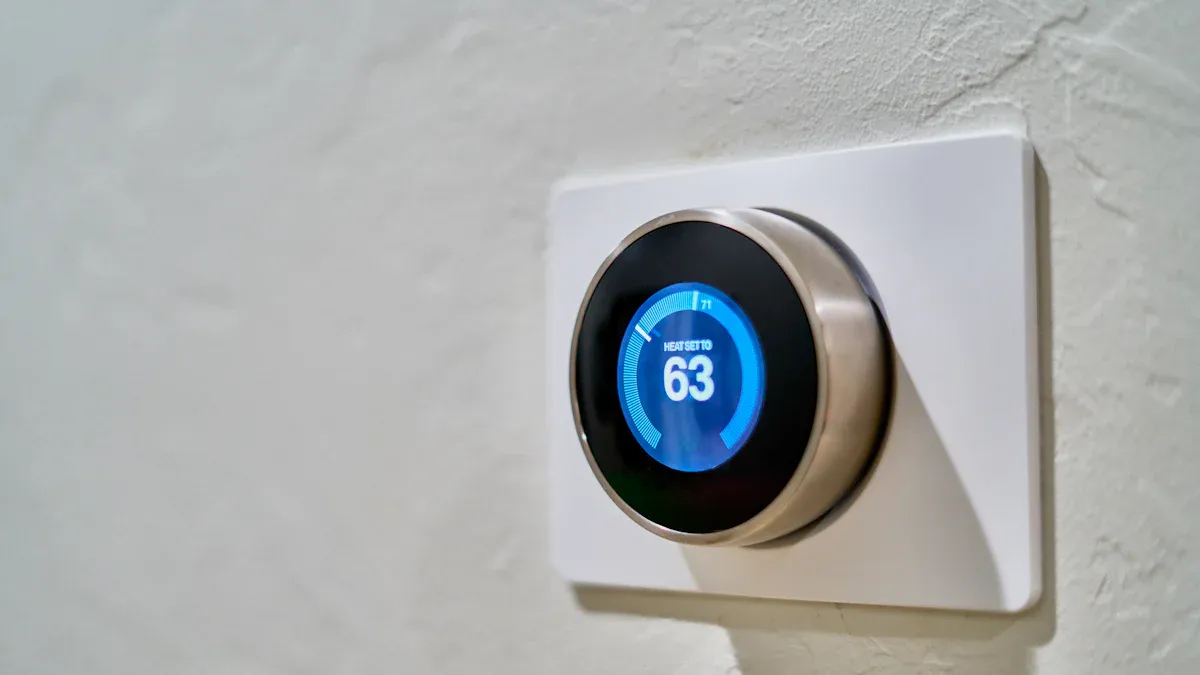
Nest Learning Thermostat
The Nest Learning Thermostat is known for its sleek design and advanced learning capabilities. Here are some standout features:
Eco Mode Indicator: This feature helps you save energy by suggesting temperature settings that reduce energy usage.
Nest Renew Service: This service allows you to use energy during low-demand periods, which can lead to lower energy bills.
Email Updates: You receive updates on your energy patterns, helping you understand your usage better.
Here’s a quick look at its energy-saving features:
Thermostat Model | Energy-Saving Features |
|---|---|
Nest Learning Thermostat | Eco mode indicator, Nest Renew service for low-demand energy usage, email updates on energy patterns. |
Model B Features
Amazon Smart Thermostat
The Amazon Smart Thermostat is a budget-friendly option that doesn’t skimp on features. Here’s what you can expect:
Eco Icon: This icon helps you choose energy-efficient temperature settings.
Alexa App Insights: You can access insights on your carbon impact through the Alexa app.
Automatic Adjustments: The thermostat makes automatic adjustments based on your habits, ensuring you save energy without even thinking about it.
This model also offers impressive energy-saving features:
Thermostat Model | Energy-Saving Features |
|---|---|
Amazon Smart Thermostat | Eco Icon for temperature settings, Alexa app insights on carbon impact, automatic adjustments for energy savings. |
Model C Features
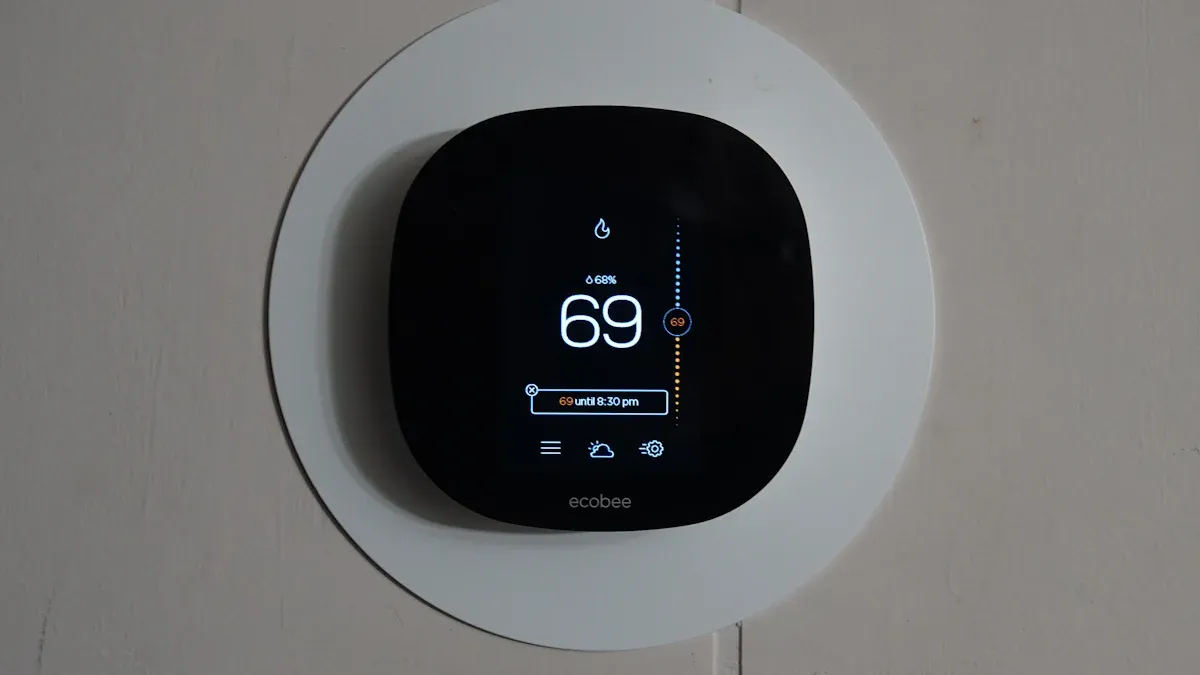
Ecobee SmartThermostat
The Ecobee SmartThermostat is another excellent choice, especially if you want smart home integration. Here are its key features:
Room Sensors: These sensors help manage hot or cold spots in your home, ensuring even temperature distribution.
Voice Control: You can control the thermostat using voice commands, making it easy to adjust settings hands-free.
Smart Home Integration: It works seamlessly with other smart home devices, allowing you to create a fully automated environment.
In terms of reliability and user satisfaction, the Ecobee SmartThermostat consistently receives high ratings. Users appreciate its performance and ease of use.
Warranty and Customer Support
When choosing a smart thermostat, consider the warranty and customer support options. Here’s how some leading brands compare:
American Standard offers a 10-year registered warranty if installed by a professional and registered within 60 days.
Other brands typically provide warranties ranging from 1 to 3 years.
American Standard includes remote diagnostics via their app, allowing dealers to access thermostat data for troubleshooting.
By comparing these models, you can find the smart thermostat that best fits your needs and budget. Each option has unique features that can enhance your home’s comfort while providing energy savings.
Choosing the right smart thermostat for your home can significantly enhance your comfort and save you money. Here are some key factors to consider:
Factor | Description |
|---|---|
Compatibility | Ensure the thermostat works with your HVAC system type (e.g., central, heat pump). |
Interface & Controls | Evaluate user interface options like touchscreens or app controls based on personal preference. |
Learning Capabilities | Look for models that adapt to your schedule and preferences using machine learning. |
Energy Efficiency | Seek features like geofencing and occupancy sensors that help save energy while maintaining comfort. |
Smart Home Integration | Check compatibility with other smart devices for enhanced automation and control. |
By making an informed decision, you can enjoy long-term benefits like reduced utility bills and automated temperature control. So, take your time, assess your needs, and choose a smart thermostat that fits your lifestyle. Your home will thank you!
FAQ
What is a smart thermostat?
A smart thermostat is a device that automatically adjusts your home’s heating and cooling based on your preferences and schedule. It connects to your Wi-Fi, allowing you to control it remotely via a smartphone app.
How do I install a smart thermostat?
Installing a smart thermostat typically involves removing your old thermostat, connecting the new one to your HVAC system, and following the manufacturer’s instructions. If you’re unsure, consider hiring a professional for installation.
Can a smart thermostat save me money?
Yes! A smart thermostat can help you save on energy bills by optimizing your heating and cooling. Many users report savings of up to 10% on their energy costs after installation.
Do I need a C-wire for a smart thermostat?
Many smart thermostats require a C-wire for power. If your home doesn’t have one, you may need to install a C-wire adapter or choose a model that doesn’t require it.
Are smart thermostats compatible with all HVAC systems?
Not all smart thermostats work with every HVAC system. Check compatibility with your specific system type, such as central air, heat pumps, or multi-stage systems, before purchasing.