Are you wondering if a gaming laptop is worth it? The answer often leans towards yes, especially if you value performance and portability. A gaming laptop is worth it because it packs powerful hardware, making it capable of handling demanding games and applications. Plus, it lets you game anywhere, whether at home or on the go. Major brands like Lenovo, Dell, and Razer dominate the market, holding over 92% of the share. This shows that many gamers trust these devices for an exceptional gaming experience, reinforcing the idea that a gaming laptop is indeed worth it.
Key Takeaways
Gaming laptops offer powerful performance and portability, making them ideal for gamers on the go.
Consider your gaming habits: if you game mostly at home, a desktop may be a better investment; if you travel, a gaming laptop is worth the extra cost.
Look for key specs like a strong GPU, CPU, and at least 16GB of RAM to enhance your gaming experience.
While gaming laptops are less upgradeable than desktops, they still provide versatility for both gaming and everyday tasks.
Evaluate your budget: gaming laptops are pricier but offer convenience that can justify the investment for many users.
Is a Gaming Laptop Worth It: Cost Comparison
When considering whether a gaming laptop is worth it, cost plays a significant role. Let’s break down how gaming laptops stack up against desktops and other laptops.
Gaming Laptop vs. Desktop Pricing
Gaming laptops often come with a higher price tag compared to desktops. Why? Desktops generally offer more power for less money. You can build a gaming desktop with high-end components for a lower overall cost than a gaming laptop with similar specs. For instance, a powerful gaming desktop might cost around $1,200, while a gaming laptop with comparable performance could easily reach $1,500 or more.
However, don’t forget about the added value of portability. With a gaming laptop, you can take your gaming experience anywhere. If you travel frequently or prefer gaming in different locations, the convenience of a gaming laptop can justify the extra cost.
Tip: Consider your gaming habits. If you mostly game at home, a desktop might be the better investment. But if you need to game on the go, a gaming laptop is worth the extra cost.
Gaming Laptop vs. Other Laptops
Now, let’s compare gaming laptops to standard laptops. Standard laptops usually focus on everyday tasks like browsing and word processing. They often come at a lower price point, typically ranging from $500 to $1,000. However, they lack the power needed for gaming.
Here’s a quick look at the differences in pricing and performance:
Device Type | Average Price Range | Gaming Capability |
|---|---|---|
Gaming Laptop | $1,200 – $3,000 | High |
Standard Laptop | $500 – $1,000 | Low |
While standard laptops are cheaper, they won’t deliver the gaming experience you desire. If gaming is a priority for you, investing in a gaming laptop makes sense.
Additionally, gaming laptops often come with extended warranty options tailored for gamers. These warranties cover issues like liquid damage and wear, which are crucial for high-performance devices. Companies like Upsie offer competitive pricing and flexible warranty options that can be more advantageous than traditional warranties.
In terms of energy consumption, gaming laptops are generally more efficient than desktops. During intensive gaming sessions, a gaming laptop consumes between 30 to 300 watts, while a gaming desktop can use 200 to 500 watts. This efficiency can lead to savings on your electricity bill over time.
Gaming Performance
Key Specs for Gaming Experience
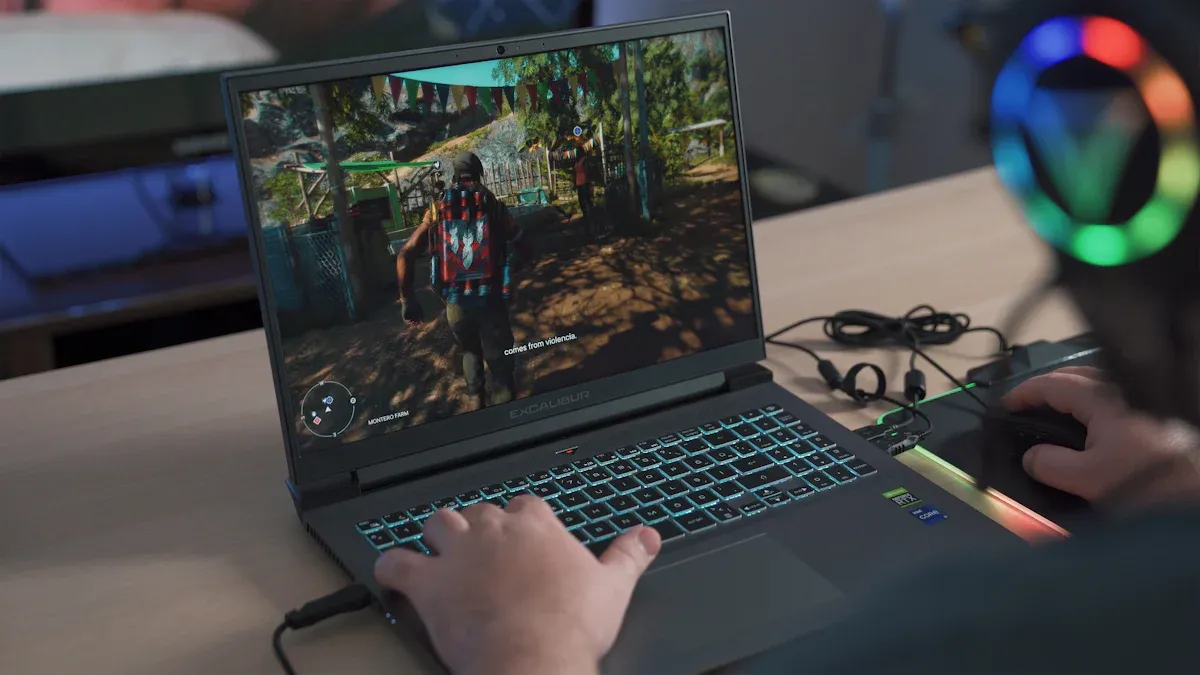
When you think about a gaming laptop, several key specifications come to mind that can significantly enhance your gaming experience. Here’s what you should look for:
Graphics Card (GPU): A powerful GPU is essential for smooth gameplay. Look for models like NVIDIA GeForce RTX or AMD Radeon RX series. These GPUs handle high-resolution graphics and demanding games with ease.
Processor (CPU): A strong CPU, such as Intel Core i7 or AMD Ryzen 7, ensures that your laptop can keep up with the latest games and multitasking demands.
RAM: Aim for at least 16GB of RAM. This amount allows for seamless gaming and running background applications without lag.
Storage: Solid State Drives (SSDs) are preferable over Hard Disk Drives (HDDs) for faster load times. A combination of SSD for your operating system and HDD for additional storage can be a great balance.
Display Quality: Look for a display with a high refresh rate (144 Hz or higher) for smoother visuals. A higher refresh rate means less motion blur and a better gaming experience.
Here’s a quick comparison of display aspects between gaming laptops and desktops:
Aspect | Gaming Laptops | Gaming Desktops |
|---|---|---|
Refresh Rate | 144 Hz – 240 Hz displays available | Supports higher refresh rates effectively |
Performance | Optimized for laptop’s GPU | Consistent frame delivery without stuttering |
Thermal Management | Limited by thermal constraints | Designed for optimal thermal management |
GPU Compatibility | Can drive 240 Hz displays via USB-C | Equipped with DisplayPort 1.4 and HDMI 2.1 |
Balanced Configuration | Matches CPUs and GPUs for 144 Hz | High-end setups for 240 Hz+ gaming |
Real-World Gaming Performance
In real-world scenarios, the performance of a gaming laptop can vary based on its specifications and cooling solutions. Effective cooling is crucial for maintaining performance during intense gaming sessions. High-quality CPU coolers can significantly enhance performance by keeping temperatures low. A temperature drop of just 10°C can lead to performance improvements of up to 20%. This shows how important it is to choose a laptop with good cooling solutions.
Many gaming laptops now feature advanced liquid cooling systems. These systems offer quieter operation and effective heat management, although they can complicate maintenance. Active ventilation with fans is still common, but balancing noise levels with cooling efficiency can be a challenge.
When you play demanding games, you’ll notice how well your laptop handles graphics and frame rates. A good gaming laptop can deliver a smooth experience without stuttering, especially when paired with a high-refresh-rate display. This combination allows you to enjoy fast-paced games like first-person shooters or racing games without missing a beat.
Portability of Gaming Laptops

Benefits of Gaming on the Go
One of the biggest perks of a gaming laptop is its portability. If you travel often for work or study, having a gaming laptop can be a game-changer. You can easily take your gaming setup with you, allowing you to enjoy your favorite games wherever you are.
Portability is a primary factor when it comes to choosing a gaming laptop. With the fast-paced lifestyle many of us live nowadays, having a laptop that also serves as a dedicated gaming machine can be perfect if you travel often.
Imagine being able to complete your assignments in a café and then dive into an intense gaming session afterward. Laptops are becoming more popular in workplace and education environments, meaning you can game and study without missing a beat.
Drawbacks of Gaming Laptop Portability
However, portability does come with its challenges. Here are some common drawbacks you might encounter:
Limited upgradeability: You can typically only upgrade storage and RAM, which restricts long-term usability.
Performance limitations: Gaming laptops often use less powerful mobile versions of CPUs and GPUs, leading to a performance gap compared to desktop PCs.
Impracticality in various locations: The smaller display of laptops can detract from the gaming experience, making it less immersive than using a larger monitor.
While a gaming laptop offers the freedom to game on the go, you should weigh these drawbacks against your gaming needs. If you prioritize performance and upgradeability, a desktop might be a better fit. But if you value the ability to travel with your gaming setup, a gaming laptop is worth considering.
Longevity and Upgradeability
Lifespan of Gaming Laptops
When you invest in a gaming laptop, you want it to last. On average, a gaming laptop can serve you well for about four to five years before you notice significant performance degradation. This lifespan can vary based on how demanding the games you play are and how well you maintain your device. As technology advances, gaming laptops can become obsolete more quickly due to the rapid progression of graphical demands. So, if you want to keep up with the latest games, you might find yourself needing an upgrade sooner than expected.
Upgradeability Issues
Upgradeability is another important factor to consider. While gaming laptops are improving, they still have significant limitations compared to desktops. Here are some key points to keep in mind:
Upgrading components like the GPU or CPU is often impossible without replacing the entire device.
Gaming laptops are generally more difficult to upgrade due to their compact design.
You can usually upgrade RAM or storage in some models, but CPU or GPU upgrades are rarely feasible for most users.
Expect to keep the same internal components throughout the laptop’s lifespan.
Most gaming laptops allow for RAM and storage upgrades, but options can vary. For example, the Alienware x16 has limited upgradeability for RAM but offers two accessible M.2 slots for storage. In contrast, the Framework Laptop 13 is fully upgradeable, allowing you to change out almost any component, including RAM and CPU.
Here’s a quick comparison of upgradeability among popular gaming laptop models:
Laptop Model | RAM Upgradeability | Storage Upgradeability | Notes |
|---|---|---|---|
Alienware x16 | Not upgradeable | 2 accessible M.2 slots | High performance with up to 32GB RAM and 8TB storage. |
Framework Laptop 13 | Fully upgradeable | Fully upgradeable | All components, including RAM and CPU, can be upgraded. |
Lenovo Legion Pro 7i | Upgradeable | Upgradeable | Powerful gaming laptop with good cooling and RGB lighting. |
Dell XPS 16 | Not upgradeable | Limited upgrade options | Excellent display and audio, but limited upgradability. |
Who Should Consider a Gaming Laptop?
Gamers and Professionals
If you’re a serious gamer or a professional who needs high performance, a gaming laptop is a great choice. These laptops come equipped with powerful hardware that can handle the latest games and demanding applications. You’ll enjoy smooth gameplay and quick load times, which can enhance your overall gaming experience.
For professionals, gaming laptops offer versatility. You can use them for work tasks during the day and switch to gaming at night. This dual functionality makes them a smart investment for those who want a single device for both work and play.
Students and Casual Users
Students often choose gaming laptops over standard laptops for several reasons. Here’s a quick look at the advantages:
Advantage | Description |
|---|---|
Performance | Gaming laptops have advanced processors and dedicated graphics cards, making them suitable for multitasking and demanding applications. |
Portability | They are designed for on-the-go use, allowing students to carry them easily between classes. |
Versatility | These laptops can handle both schoolwork and gaming, making them a single device for various tasks. |
For casual users, gaming laptops still have their place. If you enjoy gaming occasionally but also need a reliable machine for everyday tasks, a gaming laptop can meet both needs. You won’t have to compromise on performance when you want to unwind with a game after a long day.
In summary, deciding if a gaming laptop is worth it depends on several factors. Here’s what you should consider:
Performance: If you want high frame rates and stunning visuals, desktops usually outperform laptops. However, gaming laptops still offer solid performance for most games.
Portability: Gaming laptops are perfect for those who travel or share spaces. You can game anywhere, but remember, this comes with some performance trade-offs.
Cost: While gaming laptops tend to be pricier than desktops, their compact design and convenience can justify the investment for many users.
Ultimately, if you value portability and are willing to pay a bit more, a gaming laptop is definitely worth it.
FAQ
What is the average lifespan of a gaming laptop?
Gaming laptops typically last around four to five years. This lifespan depends on how demanding your games are and how well you maintain your device.
Can I upgrade the components of a gaming laptop?
Most gaming laptops allow you to upgrade RAM and storage. However, upgrading the CPU or GPU is usually not possible without replacing the entire laptop.
Are gaming laptops good for everyday tasks?
Yes! Gaming laptops excel at everyday tasks like browsing and word processing. Their powerful hardware makes them versatile for both gaming and productivity.
How do gaming laptops compare to desktops in performance?
Desktops generally offer better performance for the price. However, gaming laptops still provide solid performance, especially for those who need portability.
Do gaming laptops have good battery life?
Battery life varies by model and usage. While gaming drains the battery quickly, many gaming laptops can last several hours for regular tasks like browsing.