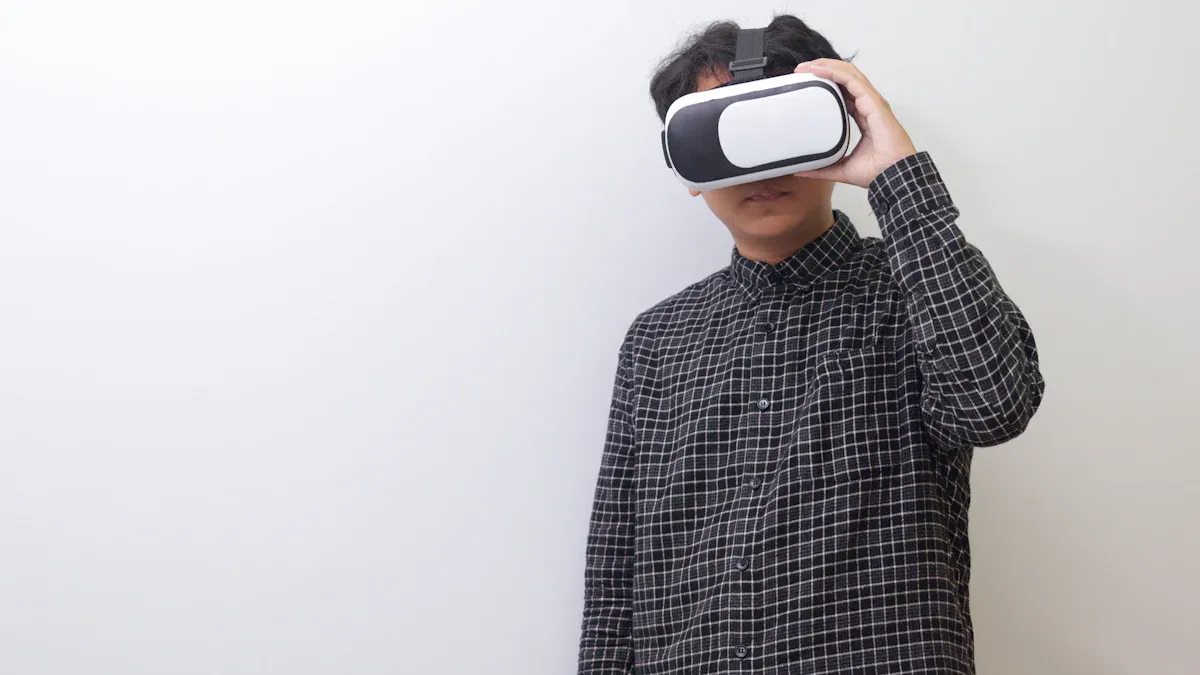
Smart glasses are innovative wearable devices that blend technology with eyewear. They offer features like augmented reality (AR), allowing you to experience digital information in real-time. These glasses enhance your interaction with the world around you.
As of 2023, the global market size of smart glasses is estimated to be between $3.5 billion and $4.2 billion. This significant growth reflects their increasing adoption across various sectors.
Feature | Smart Glasses | Regular Glasses |
|---|---|---|
Primary Function | Multifunctional tech gadgets for connectivity and augmentation | Vision correction |
Design Considerations | Prioritize tech features over comfort and aesthetics | Focus on comfort, clarity, and durability |
Integration | Integrate AR features and digital information | Serve as a medical device for accessibility |
Key Takeaways
Smart glasses combine traditional eyewear with advanced technology, enhancing your interaction with the world through augmented reality.
Key components like micro-displays and AI integration allow for hands-free access to information, improving productivity and communication.
Smart glasses are transforming healthcare and education by providing real-time data access and immersive learning experiences.
Pricing for smart glasses varies widely, so understanding features and costs helps you make informed choices when selecting a model.
Emerging technologies like AI and health tracking will shape the future of smart glasses, offering new functionalities that enhance daily life.
Definition of Smart Glasses
Smart glasses are wearable devices that combine traditional eyewear with advanced technology. They allow you to see digital information overlaid on the real world. This integration creates an interactive experience that enhances your daily activities.
Key Components
Several key components make smart glasses effective and functional. Here’s a breakdown of these essential parts:
Component | Description |
|---|---|
Optical System | Projects digital images into your field of view, creating the illusion of augmented reality. |
Micro-display | High-resolution screens that provide the light source for the optical system. |
Processing Unit | A miniaturized computer that integrates CPU, GPU, and DSP for computations and rendering. |
Inertial Measurement Unit | Tracks your head movement and orientation to maintain the position of digital objects in the real world. |
Depth Sensors | Maps the environment in 3D, allowing digital content to interact with real-world objects. |
High-Resolution Cameras | Capture the environment for tasks like object recognition and gesture tracking. |
Ambient Light Sensors | Adjust the brightness of displayed images based on surrounding light conditions. |
Smart glasses also feature built-in sensors that enhance their functionality. For example:
The EMG wristband enables you to control the glasses through subtle muscle movements, improving your experience.
Smart glasses utilize contextual AI to enhance conversations by providing relevant suggestions, which improves communication.
The integration of an EMG wristband translates muscle signals into commands, allowing for intuitive control of the glasses.
These components work together to create a seamless experience, making smart glasses a powerful tool in various applications.
How Smart Glasses Work with Heads-Up Displays
User Interaction
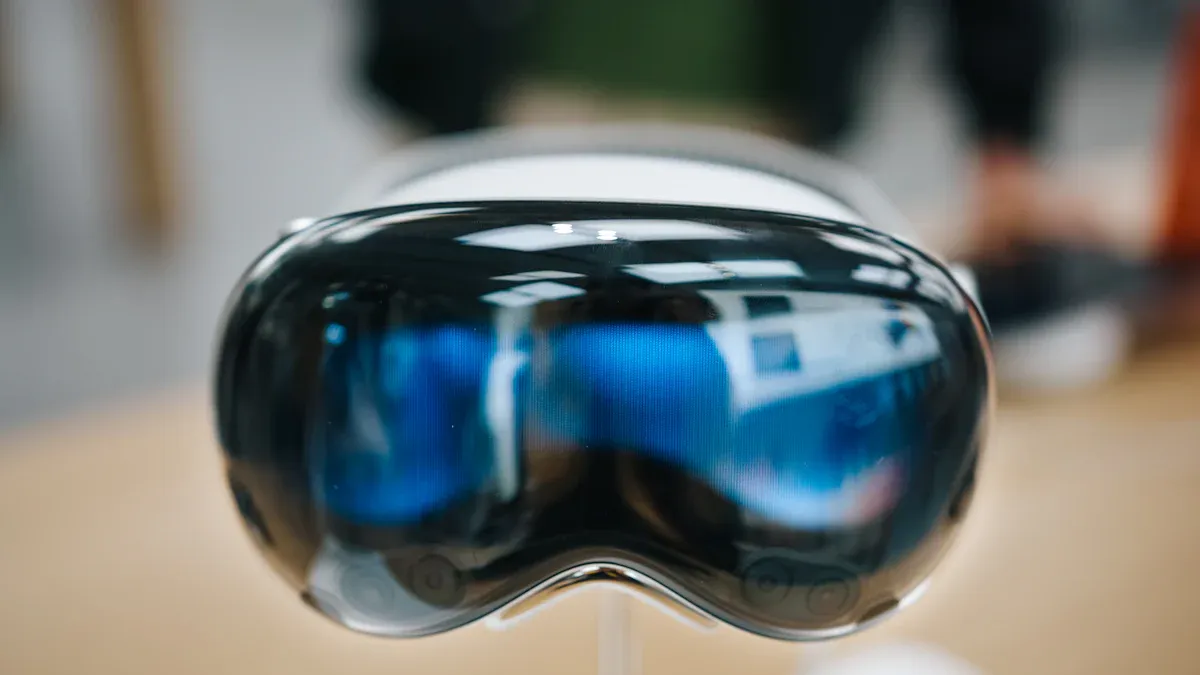
Smart glasses utilize heads-up display (HUD) technology to project information directly into your line of sight. This feature allows you to access data without looking away from your surroundings. The HUD overlays digital content onto the real world, creating a seamless blend of information and environment.
Several types of displays support this functionality. Here’s a quick overview:
Display Type | Description |
|---|---|
Micro-display | A small display projected onto a lens or using a tiny LED array for quick information display. |
Waveguide display | Routes projected light through a lens element, adding a transparent visual layer in the field of view. |
Diffractive waveguide | Uses slanted diffraction grating elements for light routing. |
Holographic waveguide | Utilizes holographic optical elements for display, often in RGB. |
Reflective waveguide | Employs a thick light guide with a semi-reflective mirror. |
Virtual retinal display | Projects images directly onto the retina of the eye. |
You interact with smart glasses through various methods. For instance, you can use voice commands to control features or access information. Many models also include touch controls located on the temple of the glasses. This allows you to swipe or tap to navigate through menus. Additionally, some smart glasses support external controllers, such as rings or wristbands, for a more intuitive experience.
Artificial intelligence plays a crucial role in enhancing your interaction with smart glasses. Here are some ways AI improves the experience:
AI smart glasses provide hands-free access to digital information. You can receive notifications and navigation prompts without checking your phone.
Real-time language translation capabilities allow you to see live captions during conversations. This feature enhances communication, especially in foreign languages.
Integration of AI assistants enables voice command functionality. This improves your engagement with the device and makes it easier to access features.
The future of AI in smart glasses focuses on ambient computing. This technology aims to provide you with relevant information seamlessly and with minimal disruption. As a result, you can enjoy a more integrated interaction with both the digital and physical worlds.
Applications of Smart Glasses
Healthcare and Education
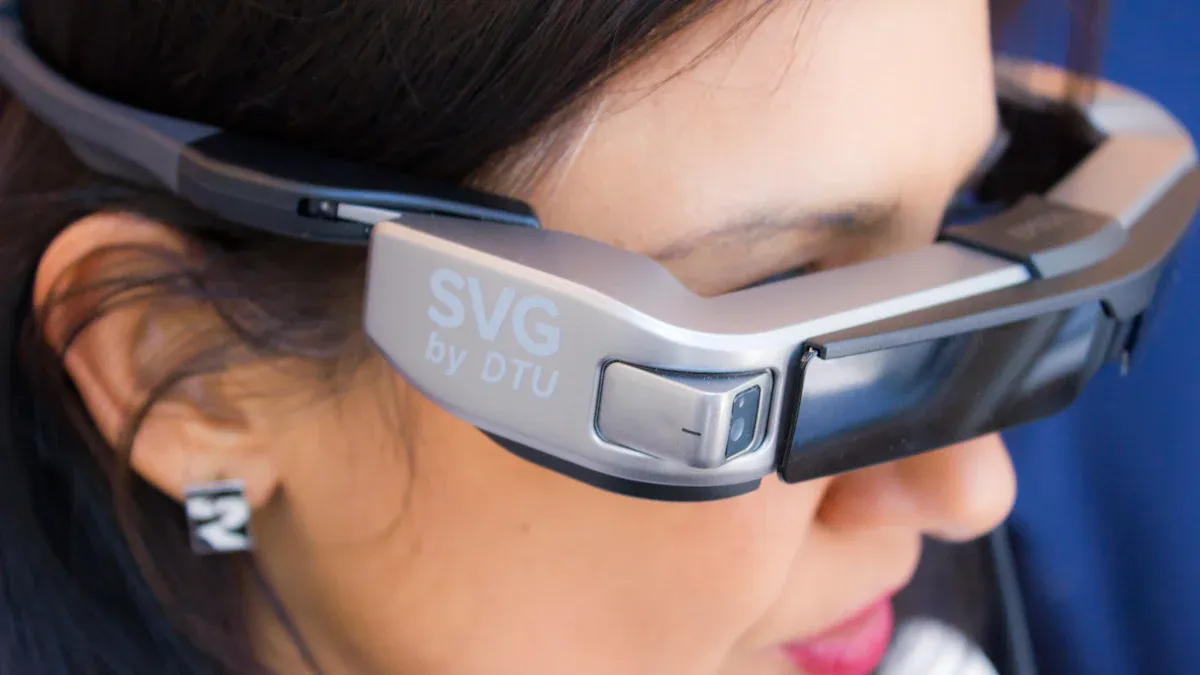
Smart glasses have transformed various sectors, especially healthcare and education. In healthcare, these devices enhance communication and improve surgical outcomes. For instance, smart glasses allow surgeons to consult with remote specialists during procedures. This real-time feedback increases surgical accuracy and provides valuable training for new surgeons. At Nuffield Health Wessex Hospital, these glasses have improved urology procedures and enhanced training experiences. Medical professionals can view surgeries from the surgeon’s perspective, which facilitates better education.
Here are some specific benefits of smart glasses in healthcare:
Improved access to specialized care in rural areas.
Enhanced training opportunities for students observing procedures in real-time.
Increased diagnostic accuracy through real-time data access.
Streamlined communication among medical teams, especially in underserved areas.
Better patient engagement through visual aids that explain complex medical concepts.
In education, smart glasses create immersive learning experiences. They have been validated for teaching clinical procedures, which enhances skill acquisition. A study showed that students report higher satisfaction and self-efficacy when using smart glasses for critical procedures. The technology also facilitates remote collaboration, allowing educators and students to connect effectively.
The following table summarizes the evidence regarding the effectiveness of smart glasses in educational settings:
Evidence Type | Findings | Source |
|---|---|---|
Enhanced Learning Experiences | Smart glasses improve learning experiences for medical students and healthcare professionals. | Sridhar et al. (2023) |
Improved Procedural Skills | Smart glasses have been validated for teaching clinical procedures, enhancing skill acquisition. | Lin et al. (2022) |
Increased Student Satisfaction | Students report higher satisfaction and self-efficacy when using smart glasses for critical procedures. | Araújo et al. (2024) |
Facilitation of Remote Collaboration | Smart glasses provide significant benefits for remote collaboration in educational settings. | Marschollek (2016) |
Positive Reception | Educators and students generally have a positive experience with smart glasses in teaching environments. | Reed et al. (2023) |
Smart glasses are revolutionizing how you learn and receive care. Their applications in healthcare and education demonstrate their potential to enhance experiences and outcomes.
Pricing and Market Trends
Smart Glasses Prescription Options
Smart glasses come in various price ranges, depending on their features and capabilities. Understanding these costs helps you make informed decisions. Here’s a breakdown of the typical pricing tiers for smart glasses:
Tier | Price Range | Description |
|---|---|---|
Entry-Level Tier | Under $300 | Basic smart glasses focusing on connectivity and convenience features. |
Mid-Range Tier | $300 – $1,200 | Advanced features including low-level augmented reality displays and better sensors. |
High-End Tier | $1,200 – $3,000+ | Full-featured augmented reality systems designed for immersive experiences. |
Several factors influence the pricing of smart glasses. Here’s a summary of these key elements:
Factor | Description |
|---|---|
Display technology | The quality and type of visual display significantly affect costs, with advanced displays being more expensive. |
AI & processing power | The level of intelligence and processing capabilities of the glasses can increase their price. |
Brand & materials | Well-known brands and premium materials contribute to higher pricing due to their perceived value. |
Camera vs. no-camera | Including a camera raises costs due to additional hardware, while no-camera designs can lower prices. |
As you consider smart glasses prescription options, you’ll find that some models can accommodate prescription lenses. For example, Ray-Ban Meta Smart Glasses allow users with vision correction needs to enjoy both smart technology and corrective eyewear. These glasses feature audio commands and app integration, enhancing accessibility for individuals with vision impairments. They provide voice-guided navigation and alerts, making them user-friendly.
When comparing prescription smart glasses to regular models, you’ll notice some differences in pricing and features:
Feature/Cost | Prescription Smart Glasses | Regular Smart Glasses |
|---|---|---|
Initial Purchase Price | Comparable to regular models | Comparable to prescription models |
Additional Costs | Significant for custom prescription lenses | Ongoing costs for contact lenses or clip-ins |
Total Cost of Ownership | Higher due to lens costs and potential changes | Lower, no recurring lens costs |
Market Trends
The smart glasses market has evolved significantly over the past five years. Here are some key trends shaping the industry:
Technological advances are making smart glasses a viable product.
Consumer awareness and new market entrants are expected to drive continued growth.
Forecasts suggest a rise to 18.7 million units by 2029.
The Global Smart Glasses Market is projected to grow from USD 2.47 billion in 2025 to USD 10.25 billion by 2031, at a compound annual growth rate (CAGR) of 26.77%. This growth is driven by the need for hands-free workflow optimization in industrial environments.
Key trends include:
Rapid adoption in industrial sectors.
Innovations in product features.
Advanced technologies like 5G and AI enhancing market dynamics.
Challenges such as regulatory constraints and privacy concerns affecting sustained growth.
As you explore smart glasses, understanding these pricing structures and market trends will help you navigate your options effectively.
Future Developments in Smart Glasses
Emerging Technologies
The future of smart glasses looks promising, with several emerging technologies set to enhance their functionality. You can expect advancements that will change how you interact with the world. Here are some key technologies to watch:
AI Integration: Smart glasses will feature sophisticated AI that acts as a context-aware companion. This means they can provide relevant information based on your surroundings and activities.
Payments on the Go: Imagine making purchases without reaching for your wallet. Mobile payment capabilities are being integrated into smart glasses, hinting at a cashless future.
Fitness Integration: Real-time workout stats will display on your glasses, turning them into personal trainers. This feature can motivate you to stay active and track your progress.
Health Tracking: Smart glasses will monitor health metrics, helping you keep an eye on your well-being throughout the day.
Augmented Reality (AR): New AR applications will enhance user experiences in various fields, including navigation and productivity.
As these technologies develop, they will reshape societal norms. For instance, the use of smart glasses may create new settings where activities compete for your attention. This shift could lead to changes in how you communicate and interact with others. Privacy concerns will also play a significant role in this evolution. Manufacturers must embed privacy protections into the hardware and software from the start. You will need clear controls over data collection and indicators when recording.
Advancements in battery technology will further improve usability. Solid-state batteries promise higher energy density and faster charging. This means your smart glasses will last longer and require less frequent charging.
Smart glasses represent a significant leap in technology, merging eyewear with advanced features. They enhance your daily life by providing hands-free access to information and improving productivity. Innovations like augmented reality lenses and smart health monitoring will shape how you interact with the world.
However, challenges such as privacy concerns and the need for compelling applications remain. As the smart glasses market continues to grow, you should consider how this technology might evolve and integrate into your life. Embrace the possibilities that smart glasses offer, as they could redefine your experiences in the near future.
FAQ
What are smart glasses used for?
Smart glasses enhance your daily activities by overlaying digital information onto the real world. You can use them for navigation, communication, and accessing information hands-free.
Can I wear prescription lenses with smart glasses?
Yes, many smart glasses models accommodate prescription lenses. This feature allows you to enjoy augmented reality while correcting your vision.
How do I control smart glasses?
You can control smart glasses using voice commands, touch controls on the frame, or external devices like rings or wristbands. This flexibility enhances your interaction with the device.
Are smart glasses safe to use?
Smart glasses are generally safe when used responsibly. However, be mindful of your surroundings to avoid accidents while engaging with digital content.
How long do smart glasses batteries last?
Battery life varies by model, but most smart glasses last several hours on a single charge. Advanced models may offer longer usage times with improved battery technology.