Getting a good night’s sleep is crucial for your overall health. Did you know that more than 30% of adults report experiencing insomnia symptoms? Poor sleep can lead to serious health issues like diabetes, high blood pressure, and even memory loss. Thankfully, wearable tech offers a way to enhance your sleep quality. By tracking sleep patterns, you can understand your sleep better and make adjustments to improve your rest. With 33% of people likely to use a wearable device for sleep tracking in the future, it’s clear that these tools are becoming essential for achieving better sleep health.
Key Takeaways
Wearable devices like smartwatches and sleep rings can track your sleep patterns, helping you understand your sleep quality.
Consistent use of wearables is essential for accurate sleep data, allowing you to make informed adjustments to your sleep habits.
Monitoring sleep stages and metrics like heart rate variability can help identify potential sleep issues, such as sleep apnea.
Integrating insights from your wearable into your daily routine can lead to significant improvements in sleep quality.
Small changes, like establishing a consistent bedtime and reducing screen time before sleep, can enhance your overall sleep experience.
Wearable Devices for Sleep
Smartwatches
Smartwatches are among the most popular wearables for sleep tracking. They come packed with features that help you monitor your sleep patterns. These devices use sensors to track your movement, heart rate, and even blood oxygen levels while you sleep. For example, the Apple Watch offers FDA-authorized sleep apnea notifications and provides a sleep score based on various metrics. However, keep in mind that its battery life lasts about 24 hours. On the other hand, the Samsung Galaxy Watch boasts a longer battery life of 30-40 hours but has limited precision in sleep staging.
Here’s a quick comparison of some popular smartwatches:
Device Type | Features |
|---|---|
Apple Watch | Sleep apnea notifications, sleep score, 24-hour battery life. |
Samsung Galaxy Watch | FDA sleep apnea feature, good battery life, limited staging precision. |
Google Pixel Watch/Fitbit | Good sleep estimates, oxygen saturation tracking, no FDA authorization for sleep apnea screening. |
Sleep Rings
Sleep rings are another innovative option for tracking your sleep. These small, lightweight devices fit comfortably on your finger and measure various metrics while you sleep. The Oura Ring, for instance, is known for its accuracy in tracking sleep stages. It uses a heart-rate sensor to provide insights into your sleep quality. In fact, studies show that the Oura Ring is one of the most accurate wearables for sleep stage tracking, outperforming many other devices.
Headbands and Clips
Headbands and clips are less common but still effective wearables for sleep tracking. These devices often measure brain activity during sleep. Lightweight headbands can provide insights into your sleep cycles without being intrusive. Some even come with built-in audio features to help you relax before bed.
Benefits of Wearable Tech for Sleep
Monitoring Sleep Stages
Wearable tech offers you a powerful way to monitor your sleep stages. These devices can track when you’re awake, in light sleep, or deep sleep. For instance, a study led by John A. Rogers introduced a wearable device that accurately classifies sleep stages by measuring physiological signals. This device, worn at the base of the neck, provides a comprehensive analysis of your sleep patterns. It can even help detect sleep disorders more effectively than traditional wrist-worn devices.
Many wearables, like the Oura Ring, have shown impressive accuracy in monitoring deep sleep stages. A multicenter validation study found that while some consumer sleep trackers tend to overestimate sleep duration, the Oura Ring demonstrated negligible bias. This means you can trust the data it provides, helping you understand your sleep quality better.
Identifying Sleep Issues
Wearable devices can also help you identify potential sleep issues. They utilize advanced algorithms to analyze your sleep data and alert you to any irregularities. For example, these devices can categorize your sleep quality as Good, Average, or Poor based on metrics like sleep efficiency and daily habits. This feature allows you to make timely adjustments to improve your sleep.
Research shows that wearable technology plays a significant role in identifying sleep disorders such as sleep apnea. In fact, 85% of studies on wearable AI technology focus on this condition. By analyzing data from wearable sensors, these devices can help you recognize if you’re at risk for sleep apnea or other sleep-related issues.
Enhancing Sleep Quality
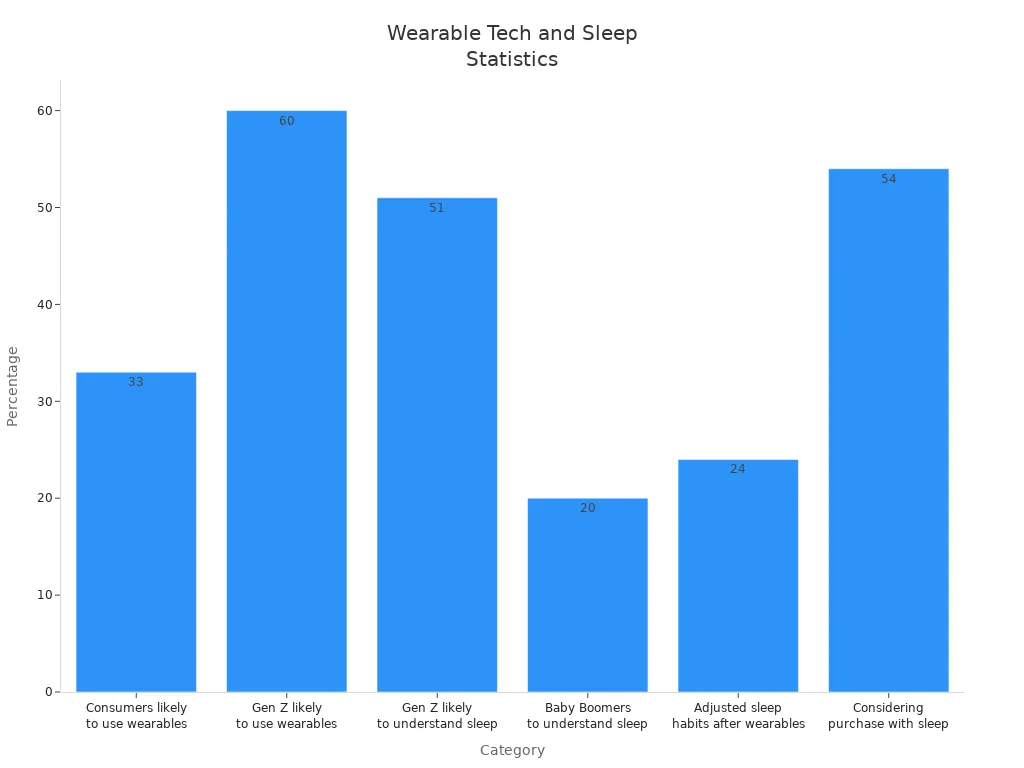
Using wearable tech can lead to better sleep overall. Many users report improvements in their sleep quality after incorporating these devices into their nightly routine. A survey revealed that 24% of respondents adjusted their sleep habits after using wearables, leading to enhanced sleep efficiency.
Moreover, wearables can help you track your sleep duration accurately. Users often notice a tendency to sleep better when they have access to their sleep data. This feedback loop encourages you to make healthier choices, such as establishing a consistent bedtime or reducing screen time before sleep.
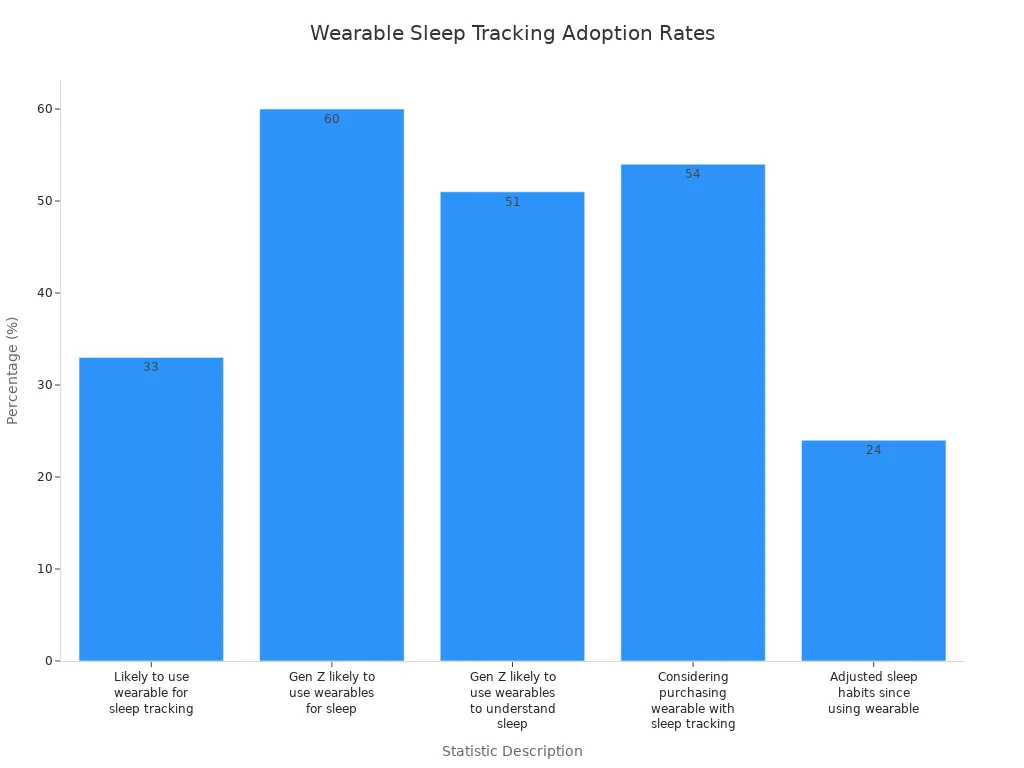
Here’s a quick look at some statistics related to wearable tech and sleep:
Statistic | Percentage |
|---|---|
Consumers likely to use wearables for sleep tracking | 33% |
Gen Z likely to use wearables for sleep | 60% |
Respondents who adjusted sleep habits after using wearables | 24% |
Understanding Sleep Data
Sleep Duration and Quality
When you track your sleep with wearable devices, you get valuable insights into your sleep duration and quality. These metrics help you understand how well you rest each night. Here are some key metrics to consider:
Metric Description | Explanation |
|---|---|
Actual Sleep Time | Measures total sleep duration per calendar day, but may oversimplify split sleep patterns. |
Naps Tracking | Addresses how naps are accounted for in daily sleep metrics, which can be inadequately tracked. |
Data Consistency | Discusses challenges in reconciling sleep data from multiple devices, leading to inconsistencies. |
Bedtime vs. Sleep | Differentiates between the time going to bed and the actual time falling asleep, affecting data accuracy. |
Time Zone Consideration | Highlights the importance of accounting for time zones in sleep tracking for accurate metrics. |
Wearable devices calculate sleep efficiency by using sensors to track your sleep stages, duration, and quality. Sleep efficiency is the percentage of time you spend asleep compared to the total time in bed. Healthy sleep benchmarks include optimal sleep duration and quality, which are crucial for your overall health.
Heart Rate Variability
Heart rate variability (HRV) is another important metric that wearables track during sleep. It reflects how well your body manages stress and recovery. Higher HRV often indicates better sleep quality and overall health. Here’s what some studies found about HRV:
Study | Findings |
|---|---|
Fox et al. (2007) | RHR is an independent predictor of cardiovascular and all-cause mortality. |
Cook et al. (2006) | Chronically elevated RHR during sleep is linked to cardiovascular morbidity and mortality. |
Guzzetti et al. (2005) | HRV is a predictor of mortality following cardiovascular events. |
You can also see how HRV correlates with your sleep quality and stress levels. For instance, during stress tasks, lower HRV showed an inverse correlation with subjective sleep quality and global sleep scores. This means that if your HRV is low, you might experience poorer sleep quality.
Oxygen Levels
Monitoring your blood oxygen levels during sleep is crucial for identifying potential health concerns. Wearable devices like the Oura Ring and Apple Watch can track these levels, but they have limitations. Here’s a quick look at how different devices monitor oxygen levels:
Device | Monitoring Method | Limitations |
|---|---|---|
Oura Ring | Worn on the finger, provides stable signals | Not designed to diagnose sleep apnea or capture brief desaturation events. |
Apple Watch | Spot measurements and background readings | Intended for wellness, not continuous monitoring; affected by wrist movement. |
Fitbit | Displays overnight average SpO₂ trends | Not FDA-cleared for diagnosing sleep apnea; accuracy drops for specific events. |
Other Brands | Varies by brand, generally wellness-focused | Not suitable for medical management; should not replace formal evaluations. |
Low overnight oxygen saturation can lead to significant sleep disturbances. For example, one study found that a lung cancer patient experienced fewer sleep disturbances after receiving alerts for low oxygen levels. This suggests that monitoring oxygen levels can help improve sleep quality.
By understanding these metrics, you can make informed decisions about your sleep habits and overall health. Wearable technology provides you with the data you need to optimize your rest.
Tips for Tracking Sleep Effectively
Consistent Usage
To get the most out of your wearable tech, you need to wear it consistently. This helps establish an accurate baseline for your sleep patterns. Here are some tips to ensure you’re using your device effectively:
Wear your tracker every night to gather reliable data.
Focus on key metrics like sleep duration, consistent bedtimes, and nighttime awakenings.
Make small adjustments to your routine based on the data you collect.
Check your sleep data in the morning, not at night. Obsessing over numbers can lead to anxiety.
Integrating Insights into Routine
Once you have your sleep data, it’s time to put it to good use. Integrating insights from your wearable into your daily routine can lead to significant improvements in sleep quality. For example, Sarah, a busy professional, used her smart wearable with a wellness app. This app provided personalized reminders for hydration, meditation, and movement breaks. As a result, she noticed a marked reduction in her stress levels and an improvement in her sleep quality.
Consider these strategies to enhance your sleep hygiene:
Strategy | Description |
|---|---|
Consistent sleep timing | Go to bed and wake up at the same time daily. |
Avoid caffeine before bed | Steer clear of caffeine several hours before sleep. |
Limit naps | Keep naps short and only in the early afternoon. |
Regular exercise | Incorporate physical activity into your day. |
Control your environment | Manage noise and temperature for better sleep. |
Adjusting Sleep Habits
Your wearable can help you identify habits that may be affecting your sleep. For instance, research shows that establishing a consistent bedtime routine can significantly improve sleep quality. Avoid using electronic devices within an hour of bedtime, as this can reduce your sleep duration by nearly 20 minutes on weeknights.
By making small changes based on your wearable’s data, you can create a healthier sleep environment. Focus on what works for you, and don’t hesitate to experiment with different strategies until you find the right balance.
In summary, wearable tech can significantly enhance your sleep quality. These devices help you monitor sleep stages, identify patterns, and even detect potential sleep issues. With options like smartwatches, sleep rings, and advanced headbands, you can find a solution that fits your lifestyle.
Consider integrating these tools into your nightly routine. As Dr. Patel points out, tracking your sleep can reveal habits that disrupt your rest. By making small adjustments based on your data, you can improve your overall sleep experience. So why not give it a try? Your body will thank you!
FAQ
What types of wearable devices are best for tracking sleep?
You can choose from smartwatches, sleep rings, and headbands. Each device has unique features. Smartwatches offer comprehensive tracking, while sleep rings focus on accuracy. Headbands can monitor brain activity during sleep.
How accurate are sleep trackers?
Sleep trackers vary in accuracy. Devices like the Oura Ring are known for precise sleep stage tracking. However, many consumer devices may overestimate sleep duration. Always consider the device’s specifications and user reviews.
Can wearables help with sleep disorders?
Yes! Wearable devices can identify patterns that indicate sleep disorders, such as sleep apnea. They analyze your sleep data and alert you to irregularities, helping you seek professional advice if needed.
Do I need to wear my device every night?
Yes, consistent usage is crucial for accurate data. Wearing your device nightly helps establish a reliable baseline for your sleep patterns, allowing you to make informed adjustments to improve your rest.
How can I improve my sleep using wearable data?
Use insights from your wearable to adjust your sleep habits. Focus on consistent bedtimes, limit screen time before bed, and create a calming bedtime routine. Small changes can lead to significant improvements in sleep quality.